Early NBA competition
A season-long professional dunk competition followed the ABA–NBA merger.
Before the movement to count, verify, and preserve the dunk, basketball spent years deciding whether the play should be allowed at all.
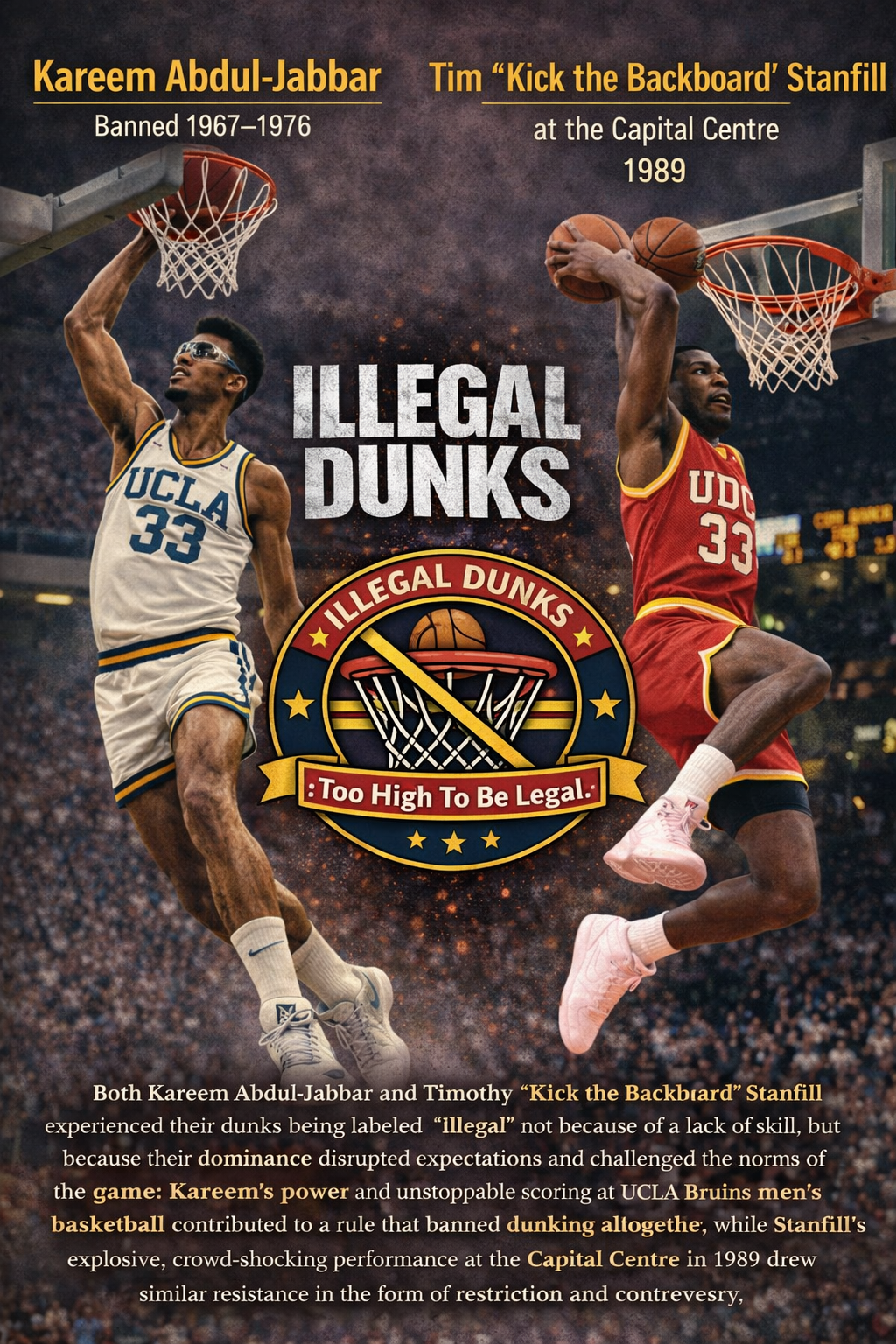
From the 1967–68 season through 1975–76, the national rules governing college and high-school basketball prohibited the dunk. The shot returned for the 1976–77 season.
The ban is often nicknamed the “Lew Alcindor rule” because it followed Lew Alcindor’s dominant first varsity season at UCLA. He later became Kareem Abdul-Jabbar. The historical record supports the dates of the ban; explanations for why it was adopted remain debated.
Basketball once prohibited the dunk entirely. Even after the dunk returned, its premier professional showcase was interrupted more than once—demonstrating the difference between temporary entertainment and a permanent statistical record.
A season-long professional dunk competition followed the ABA–NBA merger.
No NBA dunk contest was held until the modern All-Star Weekend event began in 1984.
The slam-dunk contest was removed and replaced by the WNBA–NBA 2Ball shooting competition.
The entire All-Star Weekend—and therefore the dunk contest—was canceled during the league’s labor dispute.
The contest returned, but the dunk still remained entertainment rather than its own permanent official game statistic.
DunkStat™ seeks to establish the slam dunk as an official, countable, and universally recorded statistic throughout every level of basketball—whether or not a dunk contest is being held.
Historical distinction: The 1998 removal was specific to the dunk contest. The 1999 absence resulted from cancellation of the entire All-Star Weekend, not a separate decision against the dunk.
During the 1967–1976 college and high-school rules era, dunking itself was prohibited. A dunk in covered competition was disallowed under the rules then in force.
A dunk may be penalized when it occurs at a prohibited time—such as with a dead ball or under a governing association’s warmup and conduct rules.
A contest or record attempt may be ruled invalid when it misses stated requirements for takeoff, measurement, contact, assistance, timing, or equipment.
Players and fans often say a dunk was ‘illegal’ because it was unusually powerful, creative, disrespectful, or dangerous. That expression is emphasis, not an official ruling.
Yes—but normally only when a specific rule is broken. Modern organized basketball generally permits dunking during live play. A penalty can still arise from timing, dead-ball conduct, equipment abuse, excessive hanging, unsporting conduct, or another rule adopted by the governing association.
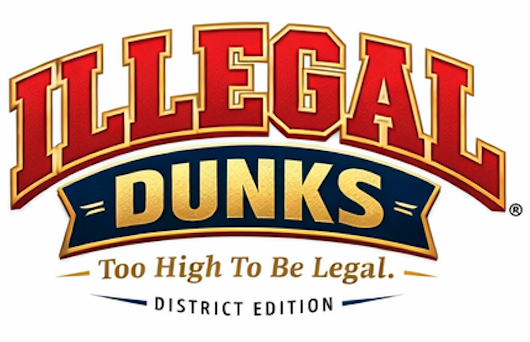
Multiple surviving newspaper clippings document that Stanfill participated in an amateur slam-dunk competition at the Capital Centre during halftime of a Washington Bullets–Boston Celtics game.
The Washington Post reported that UDC suspended Stanfill while the school and NCAA reviewed whether his participation and the announced prize affected his eligibility. A February 7, 1989 follow-up, “NCAA Clears Stanfil,” reported that the NCAA found him not in violation and restored his eligibility. A Washington Times report independently documented the reinstatement.
Most importantly for this page, a contemporary sports-page teaser used the printed headline “ILLEGAL DUNKS?” above Stanfill’s photograph. It asked whether he violated rules by competing; it did not rule that a particular dunk attempt was technically invalid. The archive therefore documents “illegal dunks” as the newspaper’s own question framing of the eligibility controversy.
These clippings establish the full sequence: public “Illegal Dunks?” framing, UDC suspension, NCAA review, clearance, and reinstatement. Select any clipping to read the full-size archival image.
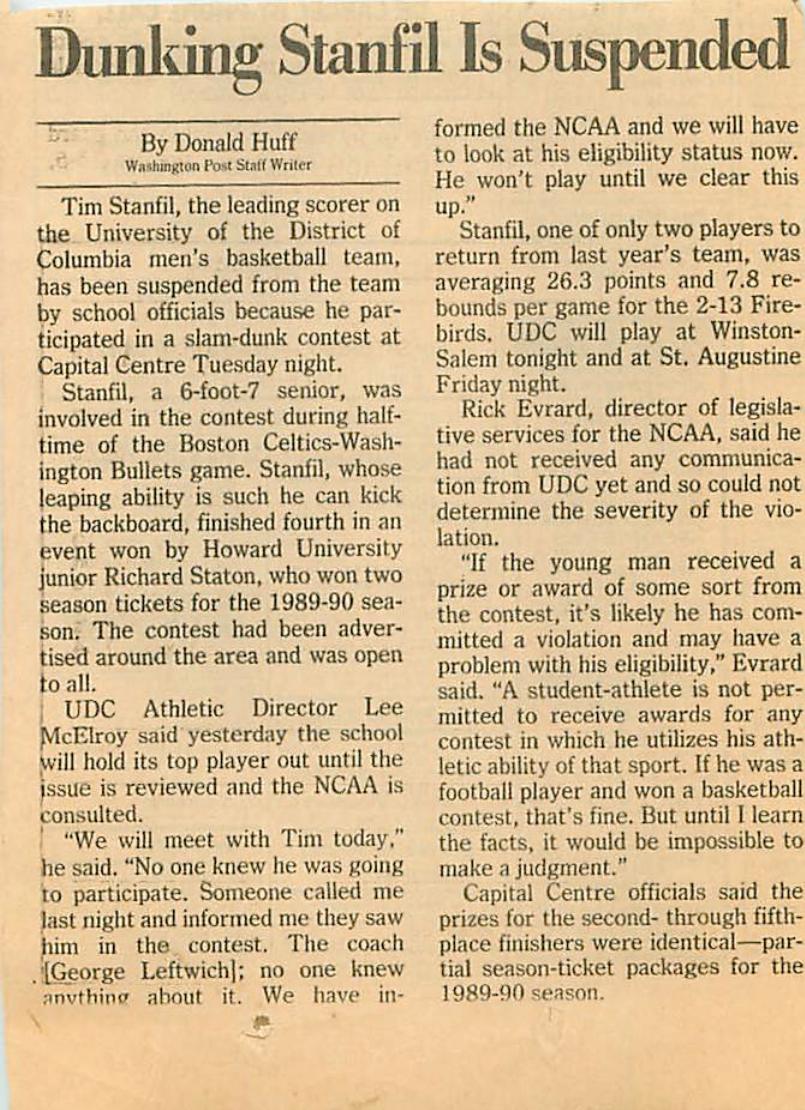
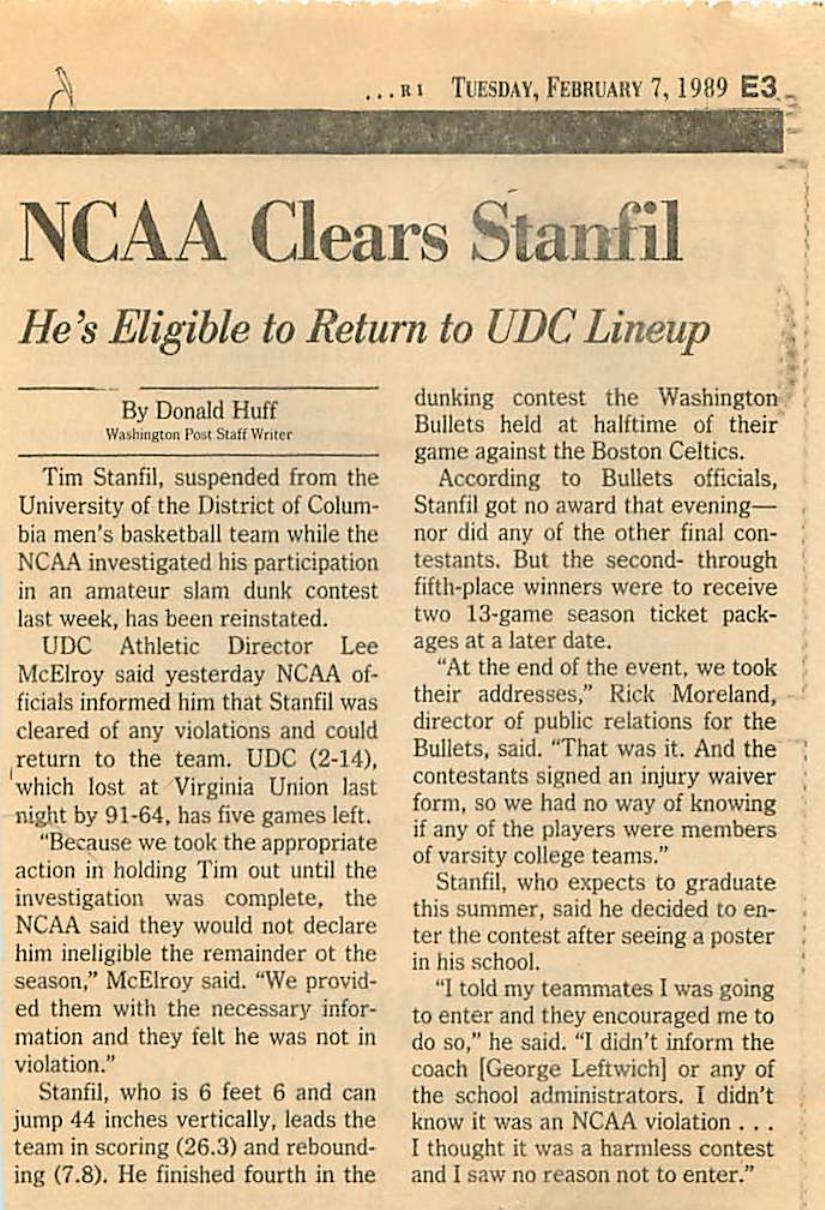
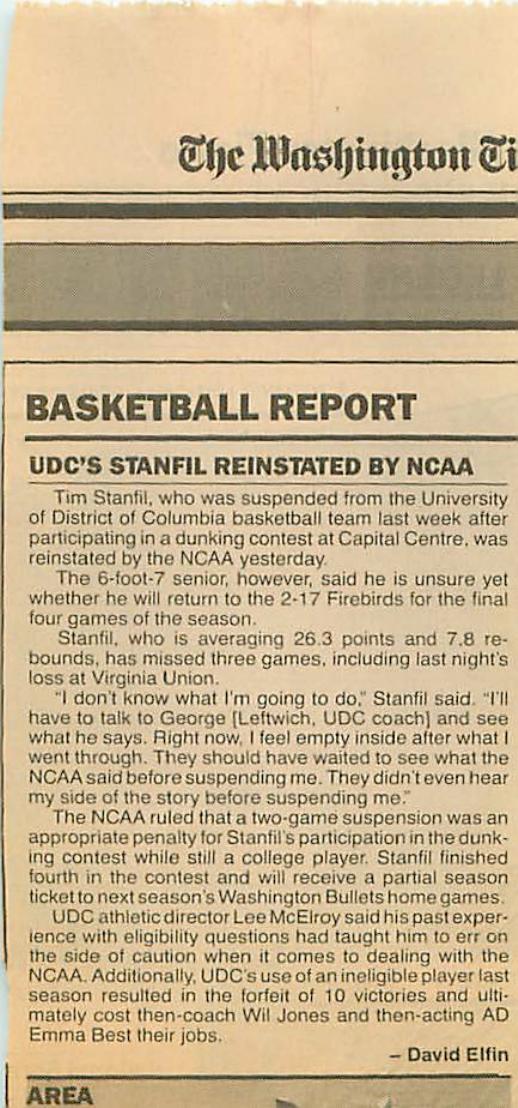
Name note: The 1989 clippings print the surname as “Stanfil.” DunkStat™ uses “Tim Stanfill” elsewhere to follow the founder’s current official spelling.
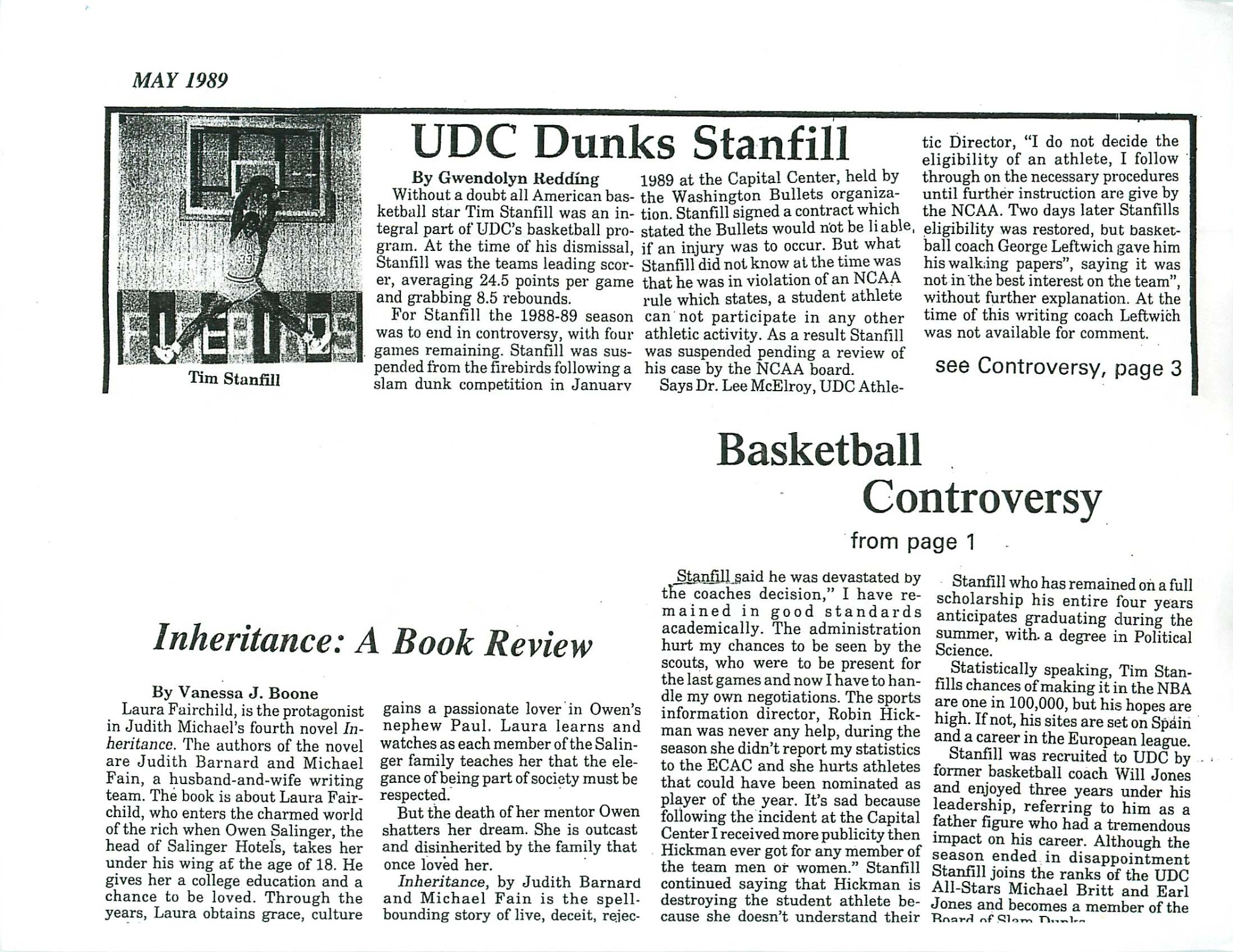
Transcription note: The page is reproduced as a historical document. The summary above follows the visible text while distinguishing the article’s documented facts from later campaign terminology.
Editorial note: Rules history, institutional sources, founder testimony, campaign artwork, and modern slang are different kinds of evidence. This page labels each one so readers can distinguish verified history from interpretation and developing archival claims.
The dunk was once prohibited. Now help make it count.